Budhanilkantha Temple
Duration: Half Day (Minimum Time)Destinations: Kathmandu / 10 Kms Approx.
Tour Type: Religious, Cultural & Pilgrims Tour
Ideal For: Hindu Pilgrims, History & Culture Enthusiasts, Peace Seekers etc
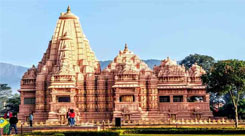
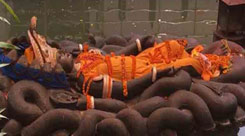
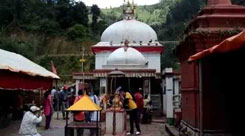
Location: The Budhanilkantha Vishnu Temple is located at the base of the Shivapuri Hill in the northern part of the Kathmandu Valley, Nepal. It is about 10 kilometers from the heart of Kathmandu city. Deity: The temple is dedicated to Lord Vishnu, one of the principal deities in Hinduism. The central figure of worship here is a large stone statue of the reclining Vishnu, known as Jalashayana Narayan. Statue Description: The statue of Vishnu at Budhanilkantha is carved from a single block of black basalt stone and measures about 5 meters (16.4 feet) in length. It depicts Lord Vishnu reclining on the coils of the cosmic serpent Shesha, with his legs crossed and resting on Shesha's eleven hoods. Vishnu's four hands hold the traditional symbols: a discus (Sudarsana Chakra), a conch shell (Shankha), a lotus flower (Padma), and a mace (Kaumodaki). The statue floats in the middle of a small pond, which represents the cosmic ocean (Kshirasagara).
 Legend:
Several legends surround the Budhanilkantha temple. One of the most popular tales is that of a farmer who accidentally discovered the buried statue while plowing his field. After realizing the divine nature of the statue, the local community built the temple around it.
Another legend ties the temple to the mythological story of Vishnu saving the universe by drinking the poison Halahala during the churning of the cosmic ocean (Samudra Manthan). It is said that this act left Vishnu exhausted, leading to his eternal rest at Budhanilkantha. Festival:
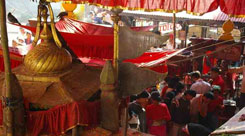
A big mela (fair) is held at Budhanilkantha on the auspicious two main Ekadashis, Harishayani and Haribodhini, marking the 4-month period when Lord Vishnu is believed to retire to sleep. Religious and Cultural Significance
Historical Background: The origins of the temple and its statue are shrouded in mystery, with various legends attributing its creation to different periods and figures. The most widely accepted belief is that the statue dates back to the Licchavi period (around the 7th century). According to local legend, the statue was discovered by a farmer while plowing his field, leading to the establishment of the temple.
Symbolism: The reclining posture of Vishnu represents the state of cosmic rest between the cycles of creation and destruction. The pond symbolizes the primeval waters from which creation emerges, making the temple a symbolic representation of the universe in its nascent state.
Religious Practices: Budhanilkantha is a major pilgrimage site for Hindus, particularly during the festival of Haribodhini Ekadashi, which falls in late October or early November. This festival marks the awakening of Vishnu from his cosmic sleep, and thousands of devotees flock to the temple to offer prayers and bathe in the sacred waters.
Access Restrictions: Interestingly, there is a long-standing tradition that prohibits the King of Nepal (traditionally regarded as an incarnation of Vishnu) from visiting the temple. It is believed that if the King were to visit Budhanilkantha, he would die.
Cultural Impact
The Budhanilkantha Temple is not just a religious site but also a cultural icon in Nepal. It is a symbol of the enduring connection between the divine and the natural world, as well as a testament to the rich history and spiritual heritage of the Kathmandu Valley. Spiritual & Religious Pilgrim's Package Tour14 Days Pilgrims Tour Nepal
11 Days Pilgrims Tour Recommended Pilgrimage Tour in Nepal:
1. Buddhist Spiritual Pilgrimage Tour Nepal - Buddhist Pilgrimage Tour
2. Hindu Piilgrimage Tour Nepal - Hindu Pilgrimage Tour
WhatsApp Live Chat:
BOOK NOW: Online Booking Form.
Support Call: +977 9816 770504 | WhatsApp or Viber
Holy Sites